Chef spotlight: Steven Bennett
Steven Bennett dreamed of being a pilot. Instead, he’s hitting the heights as Chef Patron and MD at Healing Manor in Lincolnshire, after a roller-coaster childhood and career
Where did your passion for food begin?
My mum had a bakery and my uncle ran the butchers. From the age of six I’d be making bread, meringues, Eccles cakes, then go over and help butcher lambs and pigs… so it’s in my DNA. I wanted to join the RAF but life got in the way and I fell into cheffing.
What are your key career achievements?
I did my industry placement in London but came back to my hometown of Louth at 18 and became head chef of the Brackenborough at 22. I didn’t really think about it at the time, and I’ve never looked at it like an achievement because cooking is just an opinion. Chefs aren’t gods so who am I to say what’s right and what isn’t?
What shaped you outside the kitchen?
I mucked around as a child, got kicked out of grammar school, ended up at college and messed that up as well. I was dyslexic, labelled the naughty kid and I played up to it. It’s not been an easy ride, but it’s shaped me and made me resilient.
How did you get into professional cooking?
I went to college for hotel management, not cheffing.
Failed that and fell into the cheffing side and realised it was my calling. The kitchen was more of a team… people wanted to teach you and I had a great mentor who took me under his wing. That’s when it clicked.
Where did you train and develop your skills?
At Michelin-starred Winteringham Fields in Scunthorpe.
It was a very French kitchen, no one spoke English and I’d got an F in French, so that was interesting. You’d work from 7am until 1am and it was brutal, but that’s how you learn. I never thought I was a great chef but I could outwork people and I’ve got a good memory, so I’d just take it all in.
How would you describe your cooking style?
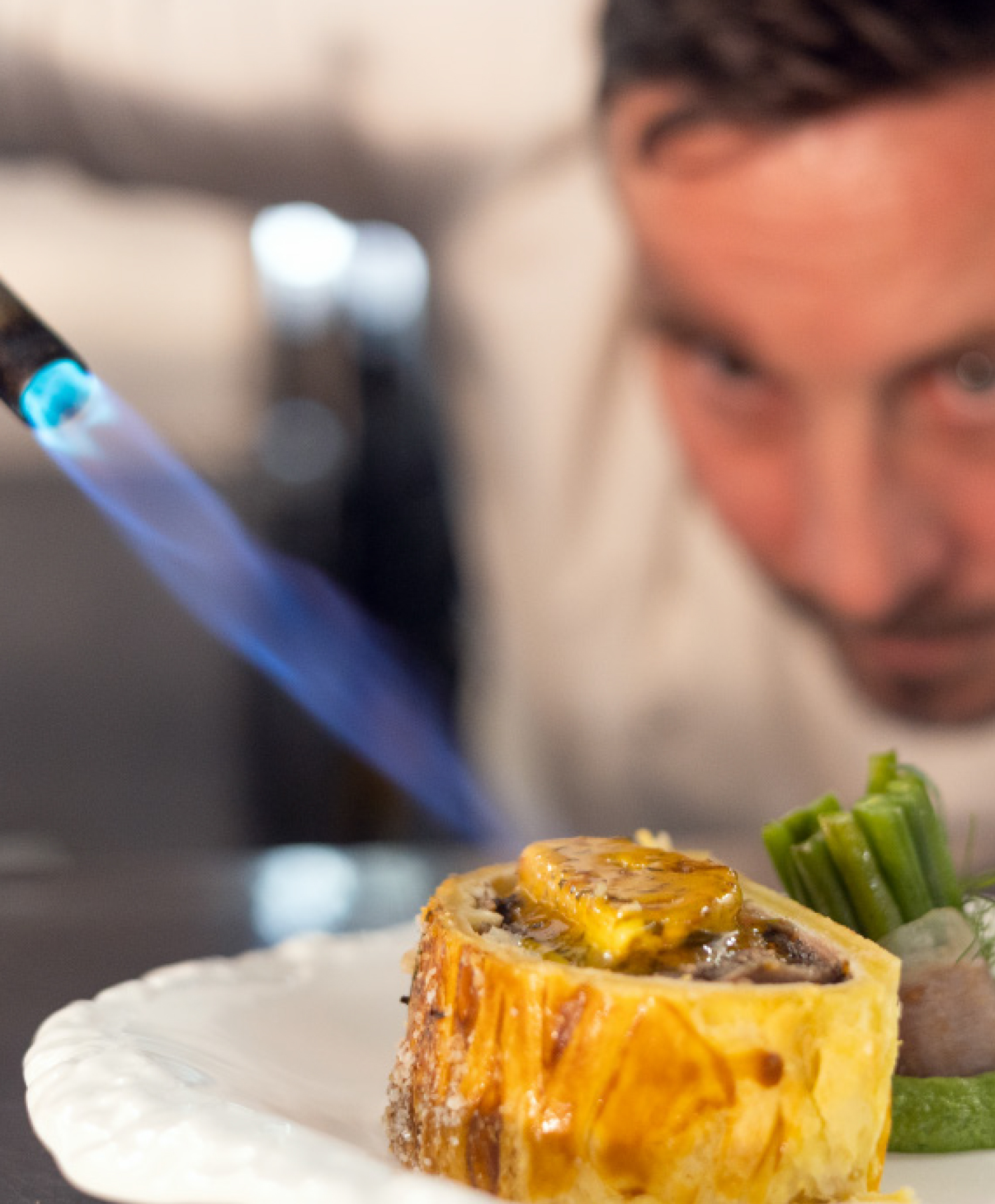
Classically French at its core, as per my training. But I’m British, so it’s about adapting that to see how you can take French techniques and apply them to British food. That’s always been my thing.
What drives your approach to food?
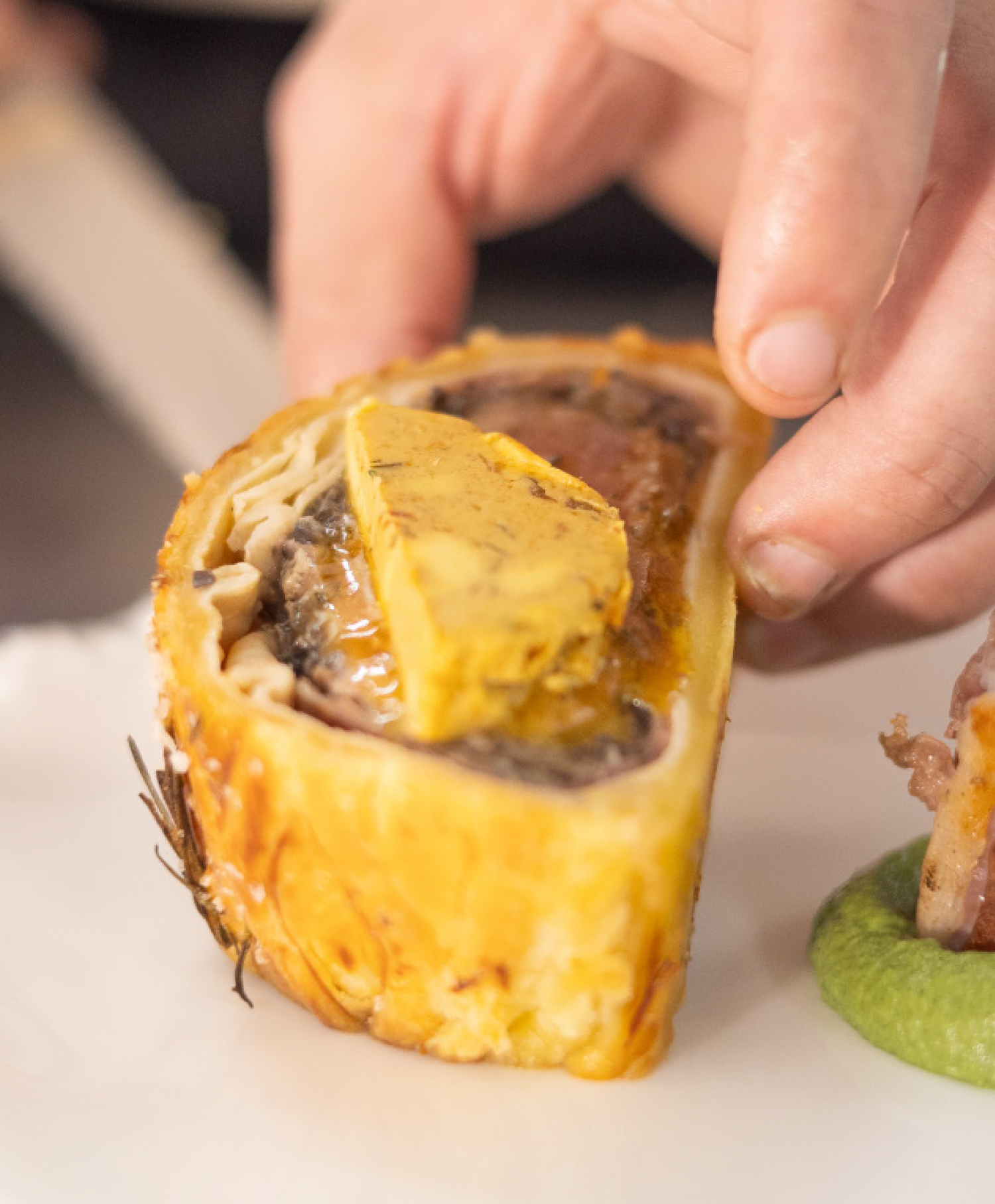
Protein needs to taste like protein. If you’re buying lamb, make it taste like lamb. I don’t get why you’d take salt marsh lamb and cover it in harissa. Put those flavours elsewhere,
in the veg or the garnish. Enhance it, don’t mask it.
What role does Lincolnshire play in your cooking?
The county is one of the biggest growers of veg in the country so I love to localise dishes right down to the county. Customers love that provenance – you don’t need to go far when it’s all here.
What kinds of dishes define your menus?
I don’t believe in signature dishes and we don’t have specials because they’re never special. Soup of the day is actually soup of the week. We change menus six times a year and follow proper seasonality even down to the micro-seasons.
What’s an example of that approach?
At the minute there’s loads of British octopus and no one is using it, so I’ll do something like ‘beans on toast’ with barbecued octopus. It’s still rooted in something British,
but you just twist it. That’s how I think about food.
What ingredients do you love working with most?
I don’t have favourites. I work off what’s in season. I’ll look at what veg is in, then build everything around that by seeing what protein’s right, what fits. It all starts there.
What dishes are you known for?
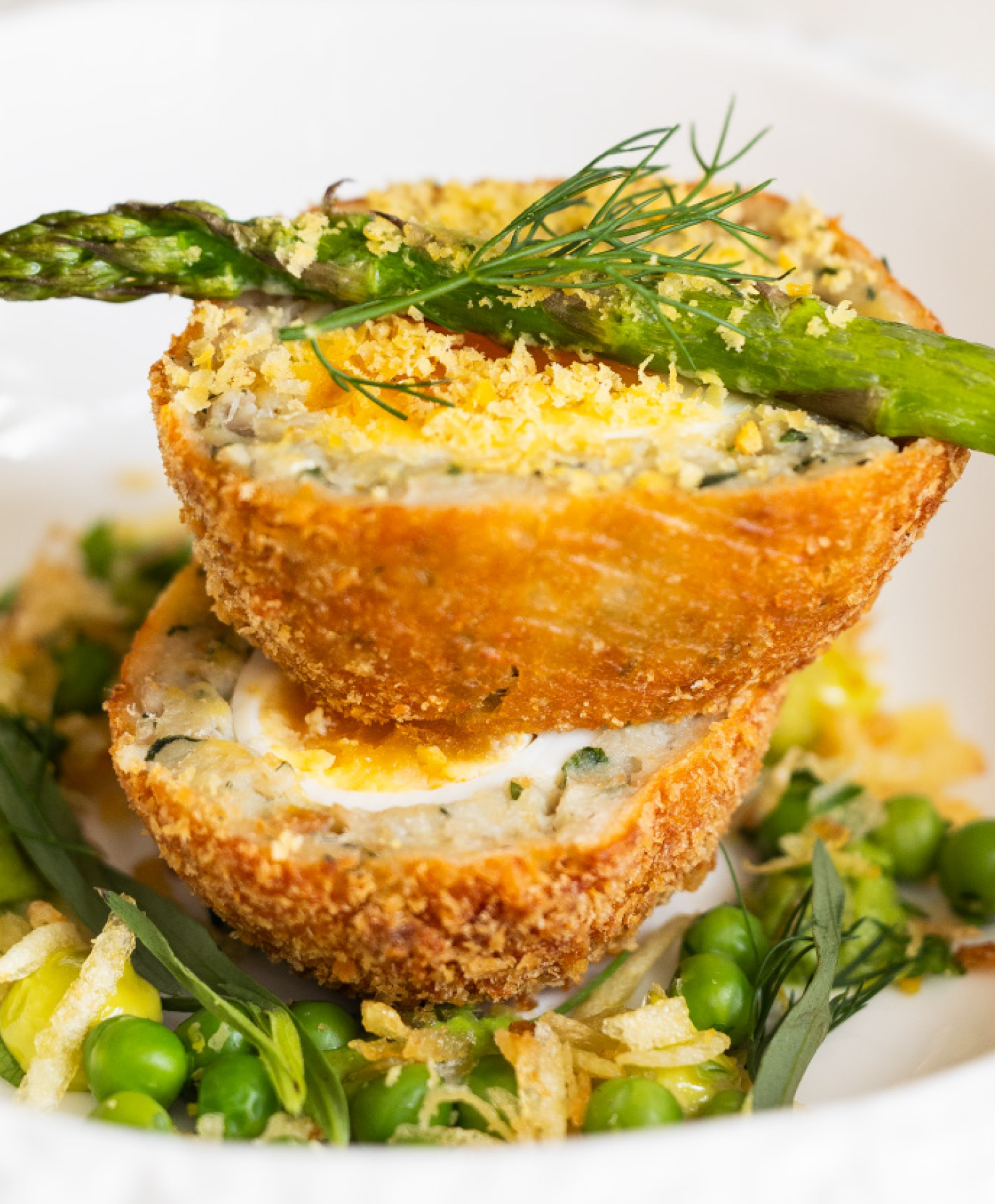
We always have a Scotch egg on, but it’s always different. I’ve been doing them for 20 years. One menu it’ll be a lamb biryani one of braised lamb with rice and poppadom crumb, and next it might be lobster with a Thermidor emulsion and parsley sauce. It changes all the time.
What’s your favourite dish?
I don’t have one. If something gets popular on the menu, I take it off. Cooking’s an opinion and I’m not saying mine’s right.
What’s your guilty pleasure?
A bowl of cereal or brown bread, really good dried ham, not quite ripe tomatoes, mayonnaise, a bit of sea salt and some Pringles. That’s me done.
One ingredient you can’t be without?
Sea salt. It’s the baseline of everything so you need to get it right. Doesn’t matter if it’s lamb, carrot or potato, it all starts there.
What values define you as a chef?
Resilient, hard-working, professional and I like a laugh. I’m fiercely loyal. And I don’t like people thinking their
opinion is gospel, because it’s not. It’s just food.